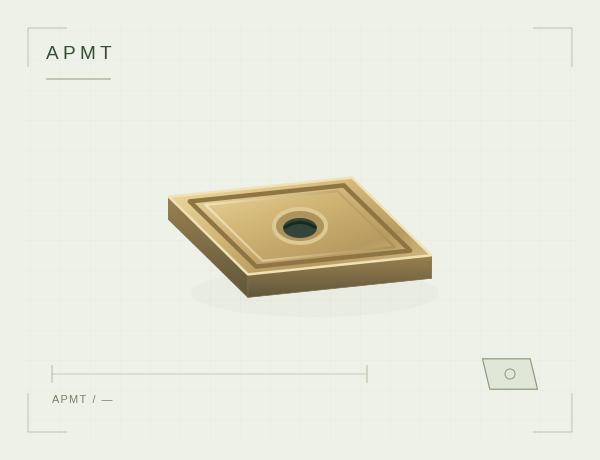
Start with the cutter, then the insert
An APMT family name describes a geometry family, not a universal milling-cutter interface. Size, thickness, locating surfaces, screw seat and cutting-edge position all affect fit. Even when two inserts look similar from above, they may not seat or clamp correctly in the same pocket. Record the cutter manufacturer and exact model before comparing replacements.
Use the complete marking from the current box or cutter documentation.
APMT designations are followed by dimensional codes and often additional corner, chipbreaker or grade identifiers. Include every suffix instead of submitting only APMT. If the marking is unreadable, provide the cutter model, a pocket photograph and a drawing or measured dimensions with units.
Describe the milling engagement
Shoulder milling, facing, pocketing and slotting load an insert differently. Include cutter diameter, number of effective teeth, axial depth of cut and radial engagement. Identify whether the cut is open or enclosed and how chips leave the pocket. For ramping or plunge moves, confirm that the cutter and insert combination is specifically designed for the tool path.
Specification checklist for APMT
| Item | What to send | Why it matters |
|---|---|---|
| Cutter body | Exact model, diameter, pocket and screw details | Confirms seating, fastening and edge position. |
| Insert | Full APMT designation, corner radius and current grade | Avoids mixing similar outlines with different dimensions. |
| Workpiece | Material grade, hardness and interrupted features | Supports a grade and edge-preparation review. |
| Milling data | RPM or cutting speed, feed per tooth, axial and radial depth | Include units and number of effective teeth; table feed is not feed per tooth. |
| Commercial details | Quantity, destination and inspection requirements | Packaging, pricing and supply terms are agreed for the confirmed item. |
This is a specification checklist, not an availability table. Dimensions, grade, coating, pack quantity, price and lead time are confirmed for the complete item in your quotation.
Troubleshooting an APMT milling process
For uneven wear between pockets, include cutter runout and whether all inserts were changed together. For chipping, describe entry strategy, chip recutting and interruptions. For a poor shoulder or floor finish, state the drawing tolerance and where the error appears. These details help distinguish an insert selection issue from a cutter, setup or tool-path issue.
APMT questions and answers
Can I swap APMT and APKT automatically?
No. Similar family names are not proof of interchangeability. Confirm the cutter manufacturer specification, dimensions, tolerance and clamping details for the exact inserts.
Can an APMT cutter be used for full-width slotting?
Only when the complete cutter system and operating conditions permit it. Full-width engagement changes chip evacuation and loading. Check the cutter guidance and state the planned operation in the enquiry.
What is the most useful starting information for a replacement?
The complete current insert code and cutter model, followed by workpiece material, operation and required quantity. A clear pocket photograph helps when the insert marking is incomplete.
Prepare your APMT enquiry
Send the complete insert code, the application details above and your estimated quantity. If a code is missing, include the holder or cutter model and a drawing or clear description. State the destination and any inspection or packaging requirements so the response can address both technical and purchasing questions.
Selection resources: CNC insert types and selection · Insert code guide
